
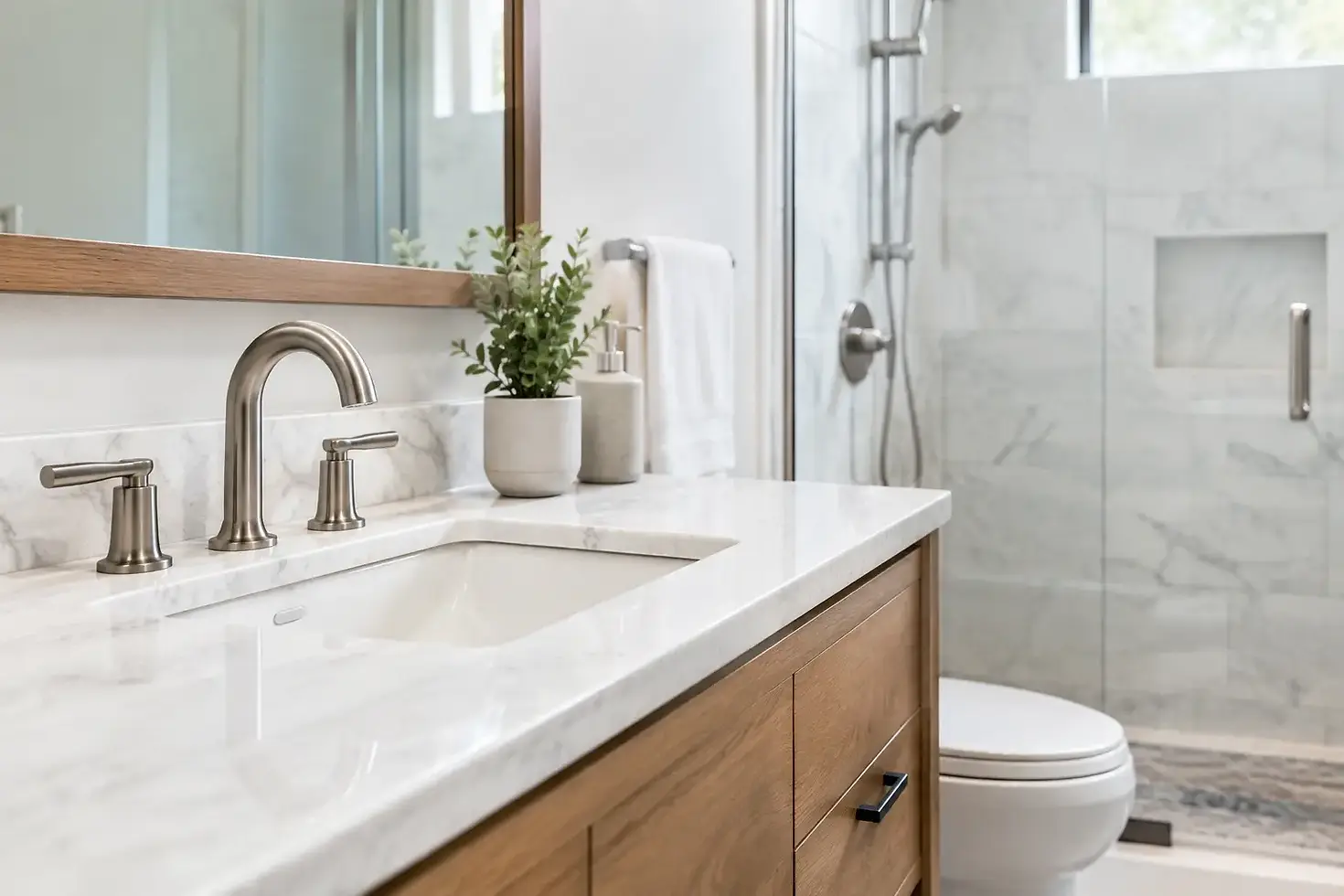
How to Select Bathroom Fixtures That Last
A bathroom can look finished on a showroom wall and still fail the first time two people need to get ready at once. The shower valve is too far from the entry. The vanity faucet splashes beyond a shallow sink. The toilet clearance feels tight. Knowing how to select bathroom fixtures means looking beyond color and style to choose products that work with the room, the plumbing, and the way your household actually lives.
For Bay Area homeowners remodeling an older home, fixture choices also affect scope and cost. Moving a toilet, changing drain locations, or choosing a wall-mounted faucet can trigger plumbing, framing, waterproofing, and tile decisions. Start with the practical work, then use finishes and details to bring the design together.
Start With the Bathroom Layout, Not the Finish
Fixture selection should follow a measured plan. Before ordering anything, confirm the room dimensions, door swing, window locations, existing drain and supply lines, and required clearances. A product may fit on paper but feel cramped when drawers, shower doors, and towels are in use.
The toilet is a common example. Its rough-in dimension, measured from the finished wall to the drain center, needs to match the plumbing plan. A standard toilet may be the most economical choice if the rough-in stays in place. A wall-hung toilet creates a cleaner visual line and can make floor cleaning easier, but it requires an in-wall carrier and more coordination during construction.
Vanity depth matters just as much. In a compact hall bath, a 24-inch-deep vanity can consume too much walking space. A shallower cabinet, wall-mounted vanity, or carefully selected corner layout may give the room better circulation without sacrificing useful storage.
Plan for Real Daily Use
Think through who uses the bathroom and when. A primary bathroom for two adults may justify a double vanity, separate controls for the shower, and storage near each user. In a guest bath, a durable single-handle faucet and simple tub-shower configuration can be the smarter investment.
Do not assume larger is always better. Two undersized sinks can be less functional than one generous basin with landing space for toiletries. A large rain showerhead is appealing, but it should be paired with a valve and drain system sized to manage the water flow.
Choose Fixtures by Priority, Not by Trend
A good fixture package has a clear order of importance: performance, fit, maintenance, water use, and appearance. Trends can help narrow the look, but they should not override the fundamentals.
For faucets, check the spout reach and height against the sink dimensions. A high-arc faucet over a shallow vessel sink may look dramatic but can create constant splashing. With undermount sinks, make sure the water stream lands near the drain rather than on the back wall or front edge of the basin.
For showers, decide whether the priority is speed, flexibility, accessibility, or a spa-like experience. A handheld showerhead is useful for cleaning the enclosure, bathing children, and accommodating changing mobility needs. A fixed showerhead can provide a clean, simple installation. Combining both may be worthwhile in a primary bathroom, provided the valve configuration and budget support it.
When selecting a bathtub, consider how often it will be used. A freestanding tub can become a focal point in a larger primary suite, but it requires room around it and can be harder to clean behind. An alcove tub is often the practical choice for a family bathroom. If you want a soaking tub, verify interior depth and back support rather than judging it by the exterior size alone.
How to Select Bathroom Fixtures for Long-Term Reliability
The parts behind the wall deserve as much attention as the parts you touch. A stylish trim kit cannot compensate for a poor-quality valve, unreliable cartridge, or inaccessible plumbing connection. Select established fixture lines with replacement parts that are readily available in the United States.
This is especially important for shower valves. The valve body is installed before wallboard and tile, while the visible trim comes later. Choose the valve and trim from a compatible system, and confirm that the valve provides the temperature control and functions you want. A pressure-balance valve is common and helps protect against sudden temperature changes. A thermostatic valve offers more precise temperature control and can support multiple outlets, but it usually costs more and requires a more involved installation.
Finish durability varies by manufacturer and product line. Polished chrome remains a dependable choice because it is widely available, easy to coordinate, and generally forgiving of water spots. Brushed nickel and brushed stainless finishes are practical for busy bathrooms. Matte black can look sharp, especially in contemporary spaces, but may show mineral deposits or scratches depending on the product quality and local water conditions.
If you choose brass, bronze, or another specialty finish, order samples or view the actual products together. “Brushed gold” is not a universal color. Tone, sheen, and undertones can differ noticeably between a faucet, shower trim, cabinet hardware, and lighting.
Match Water Efficiency to Your Household
Water-saving fixtures are standard choices in California remodeling, but efficiency should still feel comfortable in use. Look for WaterSense-labeled toilets, faucets, and showerheads where appropriate. These products are designed to reduce water use while meeting performance standards.
Toilets are often rated by gallons per flush. A high-efficiency model can reduce water consumption significantly, but flushing performance and bowl design still matter. Read product specifications, consider a proven model, and avoid selecting solely on the lowest water number.
For showerheads, flow rate affects the experience. Some homeowners prefer a lower-flow fixture for a guest bath or secondary bathroom, while others want a more substantial spray in the primary shower. The right answer depends on water pressure, household preferences, and the number of outlets planned. A qualified remodeling team can review the plumbing conditions before final selections are made.
Coordinate the Fixture Package Early
Bathroom fixtures connect to many other decisions. A wall-mounted faucet changes the backsplash layout and rough plumbing height. A recessed medicine cabinet may conflict with studs, electrical wiring, or plumbing. A linear shower drain affects tile layout, shower slope, and waterproofing details.
Create a complete selection schedule before construction reaches rough-in. It should identify the manufacturer, model number, finish, mounting type, rough-in requirements, and delivery timing for each item. Include the vanity, sinks, faucets, toilet, tub, shower valve, showerhead, drain trim, accessories, medicine cabinet, and lighting.
This step prevents expensive field changes. It also helps your contractor verify compatibility before tile is installed or walls are closed. In the Bay Area, where labor and schedule delays can add up quickly, early coordination is one of the best ways to protect the project budget.
Keep One Finish as the Anchor
A bathroom does not need every metal to match perfectly. In fact, a carefully mixed palette can feel more layered and personal. The key is to be intentional. Use one dominant finish for major plumbing fixtures, then introduce a secondary finish through lighting, hardware, or mirrors.
Limit the variety. Chrome faucets, black shower trim, brass lighting, nickel hardware, and bronze accessories can make a small room feel unplanned. If mixing finishes, repeat each one at least twice so it looks deliberate rather than accidental.
Budget Where Failure Is Expensive
Spend wisely on items that are difficult to replace after construction: in-wall valves, waterproofing, drains, toilets, and quality faucets. You can often save on easily changed elements such as mirrors, towel bars, cabinet pulls, and some decorative lighting.
A less expensive fixture is not automatically a poor choice. The issue is whether it has dependable internal components, clear installation information, parts availability, and a finish that will hold up. A low price becomes costly if a cartridge fails early or replacement parts are discontinued.
It also helps to reserve part of the fixture budget for practical accessories. Towel hooks near the shower, a toilet paper holder within reach, a robe hook, adequate vanity lighting, and a properly placed outlet can improve the room more than an expensive statement faucet.
Make the Final Decision With Samples and Specifications
Before placing orders, review finish samples under the bathroom's planned lighting. Natural daylight, warm vanity lighting, and recessed ceiling lights can make the same metal finish look different. Confirm lead times, inspect return policies, and order critical items early enough to avoid schedule pressure.
Generation Builders USA helps homeowners coordinate fixture selections with the construction details that make those choices work. A clear plan before rough-in gives you more options, fewer surprises, and a bathroom built for everyday use.
The best fixture selection is rarely the flashiest one. It is the set of choices that fits the room, supports your routine, and still feels right after years of morning traffic, wet towels, and real life.



Comments