
How to Choose an ADU Builder Palo Alto
- Jun 19
- 6 min read
If you are planning an ADU, the wrong builder usually shows up in small ways before it becomes a big problem. A vague estimate. Slow answers. A design that looks good on paper but ignores site constraints, utility runs, or local review requirements. When you are hiring an adu builder Palo Alto property owners can rely on, you are not just hiring someone to build walls and pour concrete. You are choosing the team that will shape your budget, timeline, permit path, and long-term property value.
In Palo Alto, ADU projects rarely succeed on construction skill alone. The city has high expectations, neighborhoods with varied lot conditions, and homeowners who want a finished space that feels like a true extension of the property. That means your builder needs to think beyond square footage and finishes. They need to understand planning, engineering coordination, scheduling, and the practical trade-offs that affect the final result.
What an ADU builder in Palo Alto should actually handle
A capable ADU builder should do more than hand you a price and wait for plans to appear. The strongest teams help shape the project from the beginning, because early decisions affect everything that follows. Layout, placement, structural approach, utility access, drainage, and title restrictions all influence cost and timing.
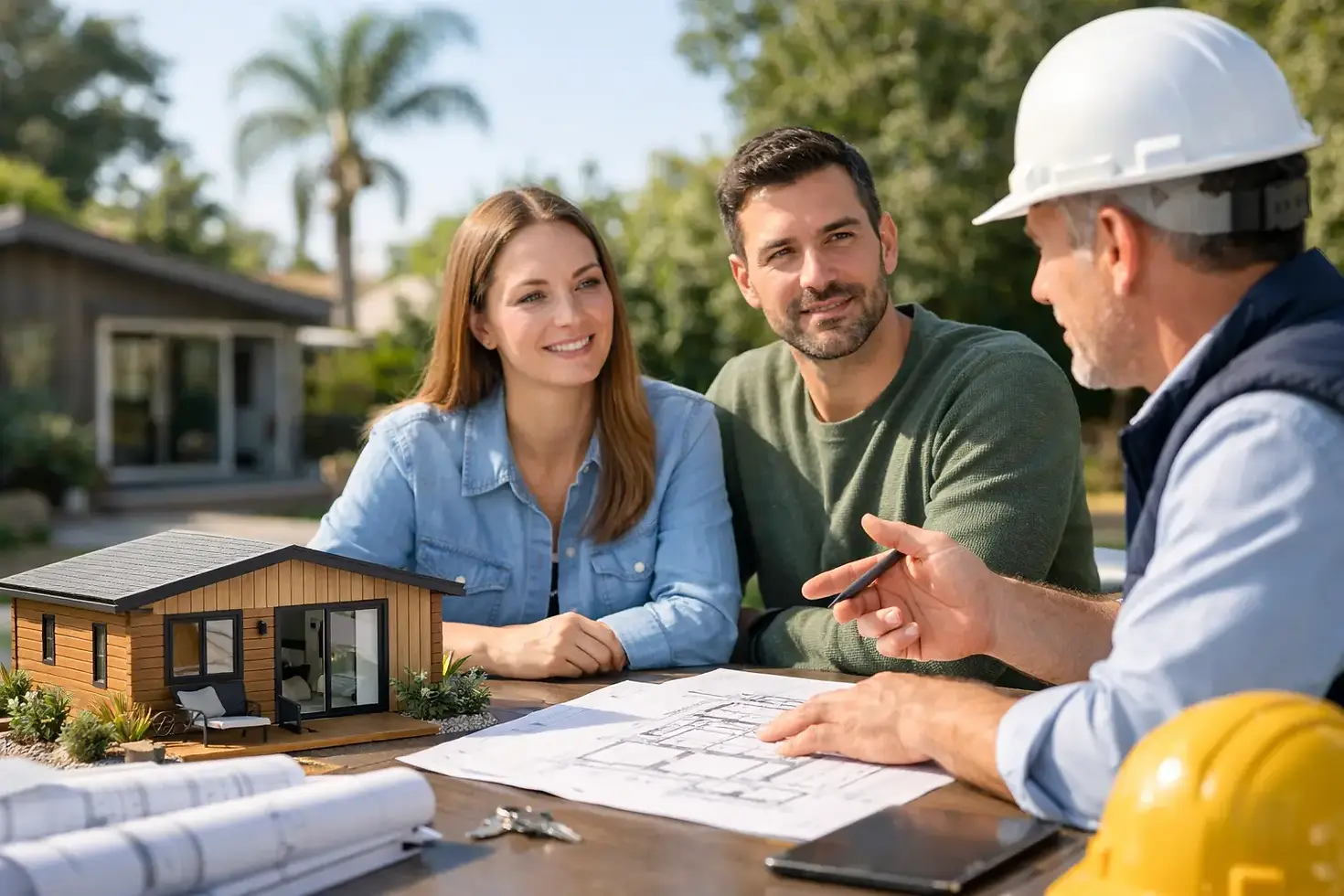
For many homeowners, the biggest value is having one accountable point of contact. Instead of chasing a designer, an engineer, a permit expediter, and separate trades, you have a builder who can coordinate the moving parts and flag issues before they become change orders. That matters even more in a market where site conditions and municipal review can shift quickly.
A true full-service builder should be able to guide feasibility, planning, design coordination, budgeting, permit preparation, construction, inspections, and final delivery. Some firms say they build ADUs, but really they are only comfortable once fully approved plans land on their desk. That is not necessarily wrong, but it is a different level of service. If you want a smoother process, ask how involved they are before permits are issued.
Why Palo Alto ADU projects need local judgment
Palo Alto is not a place where broad assumptions work well. Two properties on the same street can have different access limitations, tree considerations, utility routing challenges, or neighborhood compatibility issues. The lot may look straightforward until setback interpretation, drainage, or service upgrades enter the conversation.
This is where local judgment matters. An experienced ADU builder in Palo Alto will know how to look at a property and spot likely friction points early. Maybe the detached garage conversion sounds simple, but trenching for sewer and electrical could shift the budget. Maybe a new detached unit gives better privacy, but crane access or staging is tighter than expected. Maybe an attached ADU makes most sense structurally, but it affects the main home’s circulation more than the owner realizes.
There is no single right answer. The right answer depends on your property, your goals, and how much disruption and investment you are comfortable with.
Cost is not just about size
Homeowners often start with one question: what will it cost per square foot? That question is understandable, but it only tells part of the story. ADU pricing in Palo Alto is heavily shaped by conditions that have little to do with pure area.
Site work can move the number fast. Sloped lots, poor access, retaining needs, utility relocation, and foundation complexity all matter. The same goes for the type of ADU. A garage conversion may save money in one case and become unexpectedly expensive in another if major structural upgrades are required.
Finish level matters too, but not always in the way people expect. Cabinets, tile, flooring, and fixtures certainly affect the final number, yet mechanical, structural, and infrastructure needs often drive bigger cost swings. If your electrical service needs upgrades or your sewer connection requires more extensive work, that can outweigh a premium finish package.
A trustworthy builder will not chase the lowest possible estimate just to win the job. They will explain allowances, identify unknowns, and tell you where the range is tight versus where it is still developing. That kind of honesty protects you later.
How to evaluate an adu builder Palo Alto homeowners are considering
The most useful conversations happen before you ask for a final number. Start by looking at how the builder thinks. Do they ask about your goals for rental income, family use, guest space, or resale? Do they talk through site constraints and permit realities? Or do they jump straight to a generic sales pitch?
You should also pay close attention to how clearly they define their process. A serious builder can explain what happens first, what comes next, who handles what, and where delays typically come from. They should be comfortable discussing design coordination, engineering review, permit submissions, procurement, inspections, and closeout.
It also helps to ask how they manage revisions. ADU projects evolve. You may adjust the kitchen layout, decide to add laundry, or upgrade windows after pricing comes back. Good builders know how to absorb normal project changes without losing control of the schedule.
Another strong indicator is how they talk about trade-offs. If every answer sounds easy, be careful. An experienced contractor will tell you when one decision improves privacy but raises cost, or when one floor plan saves money but reduces natural light. Straight answers are a better sign than perfect promises.
Design and build should work together
One of the most common mistakes in ADU planning is treating design and construction as separate worlds. On paper, almost anything can look appealing. In the field, that same idea may create expensive structural spans, awkward utility routing, or inspection headaches.
That is why design-build coordination is so valuable. When the builder is involved early, the plans can be shaped around practical construction logic. Room sizes stay efficient. Structural choices support the budget. Window placement works with both privacy and code. Mechanical systems fit the actual building instead of being forced in later.
This does not mean every project needs to be stripped down or purely utilitarian. Good ADUs can still feel refined, bright, and highly customized. The goal is not to remove design ambition. The goal is to align it with buildable reality.
For homeowners in high-value neighborhoods, that balance matters. An ADU should feel like it belongs on the property, not like an afterthought in the backyard.
Timeline expectations and where delays come from
Everyone wants a fast project, but speed without structure usually creates rework. A better question is whether your builder has a process that keeps momentum without cutting corners.
Permitting often takes longer than homeowners expect, especially when revisions are needed. Material lead times can also affect the schedule if key selections are made too late. During construction, the biggest delays usually come from hidden site conditions, incomplete decisions, or poor trade coordination.
This is another reason to choose a builder who leads decisively. Clear preconstruction planning reduces field surprises. Early selections help avoid procurement problems. Strong supervision keeps subcontractors moving in the right order.
You should expect some variables. Construction is not perfectly linear. But you should not accept confusion as normal. A well-run ADU project has milestones, communication routines, and a builder who takes ownership when issues arise.
What a strong builder-client relationship looks like
The best ADU projects are built on trust, but trust in construction is not vague. It shows up in specific behaviors. Your builder returns calls. They explain numbers. They document scope. They tell you what they know, what they do not know yet, and what they are doing to close the gap.
They also respect the fact that this is your property and your money. Some clients want a high-design detached unit for family members. Others want a durable rental with smart cost control. Neither goal is wrong. The builder’s job is to guide the project toward the right outcome, not push every client toward the same template.
That is the standard we believe in at Generation Builders USA. Homeowners count on us because we lead projects with clarity, manage the details closely, and focus on getting the work done right the first time.
If you are comparing builders, pay attention to who gives you confidence in the process, not just confidence in the sales meeting. A good ADU adds flexibility, value, and long-term usefulness to your property. The right builder makes that feel achievable from the first conversation forward.


Comments