
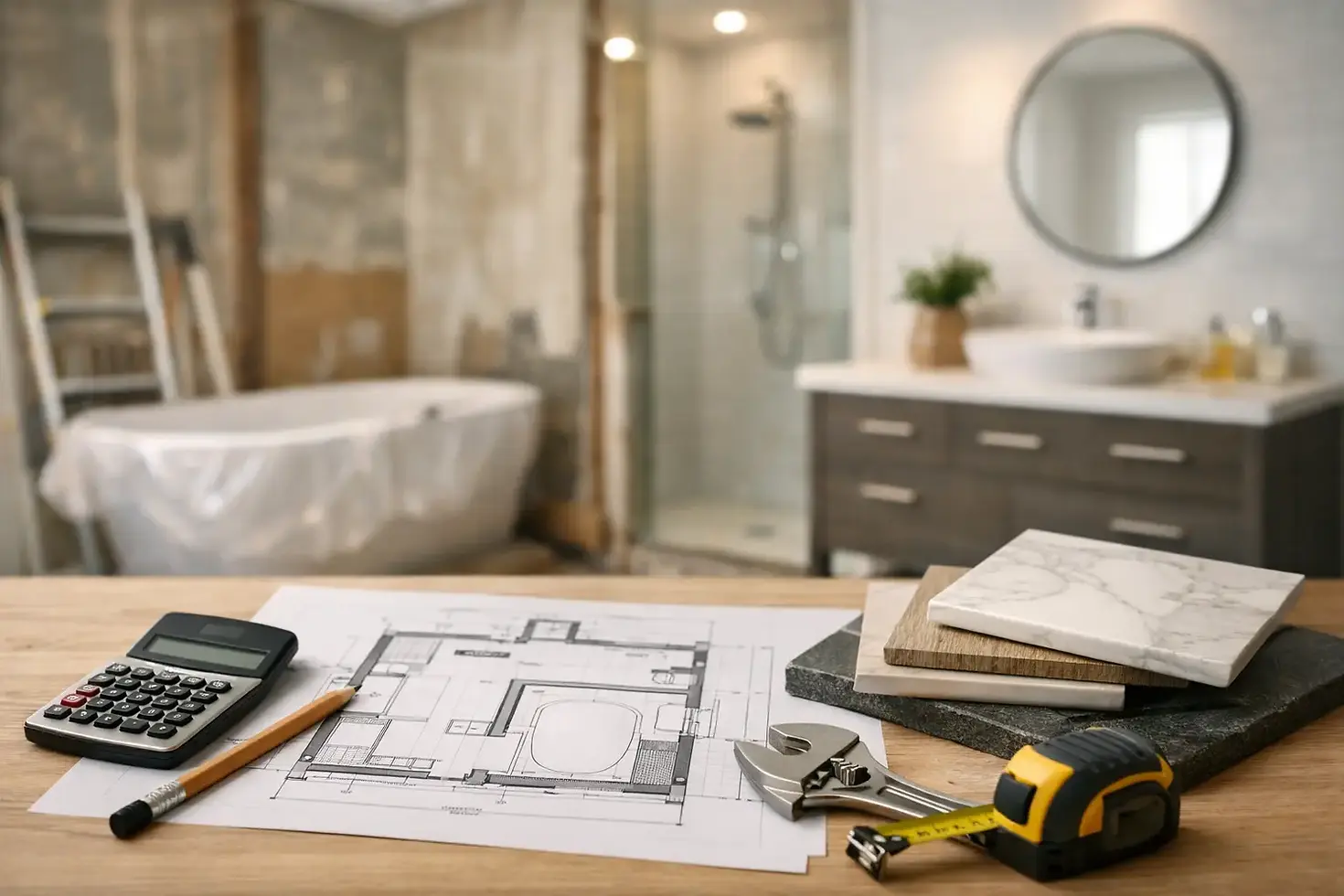
How to Budget Bathroom Renovation Right
A bathroom remodel rarely goes over budget because of one big surprise. It usually happens through a series of small decisions - moving a drain, upgrading tile, adding custom storage, choosing premium fixtures - that seem manageable one at a time. If you are figuring out how to budget bathroom renovation work, the key is to build your budget around scope first, not finishes.
That approach matters even more in the Bay Area, where labor, permitting, and material costs can move quickly. A realistic budget is not just a number you hope to hit. It is a plan that accounts for what must happen behind the walls, what you want the room to look like, and where you are willing to spend more for long-term value.
How to budget bathroom renovation without guesswork
The most reliable way to budget a bathroom renovation is to break the project into three layers: required construction, visible finish materials, and contingency. Most homeowners focus on the second layer because that is what they can see. The first and third layers are what keep the project grounded.
Required construction includes demolition, framing corrections, plumbing, electrical, ventilation, waterproofing, tile prep, and installation labor. These are not optional line items, even if they are less exciting than a new vanity or statement lighting. In older homes, especially throughout the Peninsula and San Francisco, this layer can grow if the contractor uncovers water damage, outdated wiring, poor ventilation, or plumbing that does not meet current standards.
Visible finish materials include tile, vanity, countertop, faucet, shower trim, toilet, mirror, lighting, paint, and accessories. This is where your aesthetic choices live, and it is also where pricing can swing widely. Two bathrooms may have the same layout and labor scope, but one can cost significantly more simply because of finish selections.
Then there is contingency. A good budget leaves room for what you cannot fully predict at the start. For a cosmetic refresh in a newer home, that reserve may be modest. For a full gut renovation in an older property, it should be more substantial.
Start with the type of remodel you are actually doing
Not every bathroom renovation belongs in the same budget category. Homeowners often compare pricing with friends or online estimates without realizing they are talking about completely different scopes.
A surface-level update usually means keeping the layout in place and replacing finishes only. You might swap the vanity, toilet, tile, fixtures, paint, and lighting while leaving plumbing locations untouched. This is typically the most budget-friendly path because moving water lines, drains, and electrical adds cost fast.
A mid-range remodel often includes a new shower or tub area, improved storage, upgraded tile, better lighting, and more custom finish choices. The layout may stay mostly the same, but the room gets rebuilt with better materials and stronger performance.
A full custom renovation goes further. It may involve reconfiguring the layout, expanding the shower, relocating plumbing, adding structural work, improving accessibility, or integrating premium materials and custom millwork. This kind of project requires tighter planning and a stronger construction team because design decisions affect every trade.
If you want an accurate budget, label the project correctly from the start. A cosmetic remodel with premium materials can still cost less than a layout change with average finishes, because labor complexity often drives the bigger number.
Build your budget in percentages, not just dollar amounts
When homeowners ask what a bathroom should cost, the better question is how the money should be allocated. That is how you avoid overspending on one category early and coming up short later.
In many bathroom remodels, labor and installation make up the largest share of the budget. That includes demolition, plumbing, electrical, tile work, waterproofing, carpentry, painting, and project coordination. Finish materials come next, followed by design, permits if required, and contingency.
A practical working model is to expect roughly half or more of the budget to go toward labor and construction execution, with the remaining amount split across materials, planning, and reserve. The exact percentages depend on the room size, existing conditions, and level of customization, but this framework helps keep expectations realistic.
This is also why bathrooms can feel expensive relative to their size. They pack plumbing, electrical, moisture control, detailed finish work, and multiple trades into a compact space. Small room does not mean simple room.
Decide where spending more actually pays off
A strong bathroom budget is not about choosing the cheapest option everywhere. It is about protecting the categories that affect performance, durability, and daily use.
Waterproofing is one area where cutting corners tends to cost more later. The same is true for skilled tile installation, proper ventilation, and quality plumbing parts behind the wall. These are not glamorous upgrades, but they are what keep a bathroom functioning properly over time.
Spend carefully, but do not underfund the shower assembly, substrate prep, or exhaust improvements. If those fail, cosmetic finishes will not save the room.
On the other hand, some upgrades are easier to scale. A vanity can be semi-custom instead of fully custom. Tile can be used strategically, with statement material in the shower and more cost-controlled selections elsewhere. Fixtures can look high-end without being the top tier of every brand. A framed mirror can deliver the same visual finish as a medicine cabinet if storage is not a priority.
Good budgeting means knowing which choices are structural to the project and which are stylistic.
Layout changes are where budgets shift fast
If there is one decision that can transform your budget, it is moving plumbing. Relocating a toilet, converting a tub to a curbless shower, shifting a drain, or rerouting supply lines can trigger added demolition, framing changes, inspections, and more labor across trades.
Sometimes that cost is worth it. If the current layout wastes space or does not serve your household, redesigning the room may be the right long-term move. But it should be a conscious decision, not an afterthought made after construction starts.
The most cost-controlled remodel usually keeps the toilet, shower, and vanity in roughly the same locations. If the room functions well already, preserving that footprint gives you more room in the budget for better materials and stronger craftsmanship.
Plan for older-home realities
Many Bay Area homes come with character, but they also come with aging infrastructure. A bathroom that looks ready for finishes may need subfloor repair, plumbing updates, wall straightening, or electrical correction once demolition begins.
That does not mean you should fear remodeling. It means your budget should reflect the age and condition of the property. If your home is older, reserve more contingency and work with a contractor who evaluates existing conditions carefully before final pricing is set.
This is where experienced project leadership matters. A dependable builder will tell you where uncertainty exists, what is likely to change, and how to make smart decisions before those issues become expensive delays.
How to budget bathroom renovation selections without losing control
Selections are where many budgets drift. Homeowners start with reasonable assumptions, then gradually choose products that each cost a little more. By the time tile, plumbing trim, vanity hardware, sconces, and glass are finalized, the budget has moved well beyond the original target.
The fix is simple: assign allowances before shopping. Give yourself a range for tile, vanity, plumbing fixtures, lighting, and accessories, then make choices within those numbers. If you exceed the allowance in one category, reduce somewhere else immediately instead of hoping the total will work itself out.
It also helps to choose materials in the order they affect the most downstream decisions. Start with layout, then plumbing rough-in needs, then tile and vanity dimensions, then fixtures and lighting. That sequence reduces last-minute changes and expensive revisions.
Get detailed pricing, not broad estimates
A vague quote is hard to budget from because it leaves too much open to interpretation. You want enough detail to understand what is included, what is excluded, and where allowances apply.
That does not mean every early estimate must be fully engineered. It does mean the proposal should clearly separate labor, materials, scope assumptions, and possible variables. If waterproofing, tile prep, debris hauling, permit handling, or finish installation are not clearly addressed, ask before the project moves forward.
For homeowners who want a smoother process, a design-build approach can be especially helpful because planning, pricing, and construction strategy are aligned from the beginning. Companies like Generation Builders USA often guide clients through these early decisions so the budget reflects the actual build, not just a hopeful concept.
The smartest bathroom budget is realistic from day one
The best bathroom budgets are not built around the lowest number. They are built around a clear scope, honest priorities, and a contractor who understands both construction and design. That is what keeps your remodel from becoming a chain of revisions, delays, and expensive compromises.
If you are planning a bathroom renovation, give the hidden work the respect it deserves, keep layout changes intentional, and make finish selections with discipline. A well-budgeted remodel does more than protect your wallet - it gives you a bathroom that looks right, works right, and holds up the way it should.


Comments