
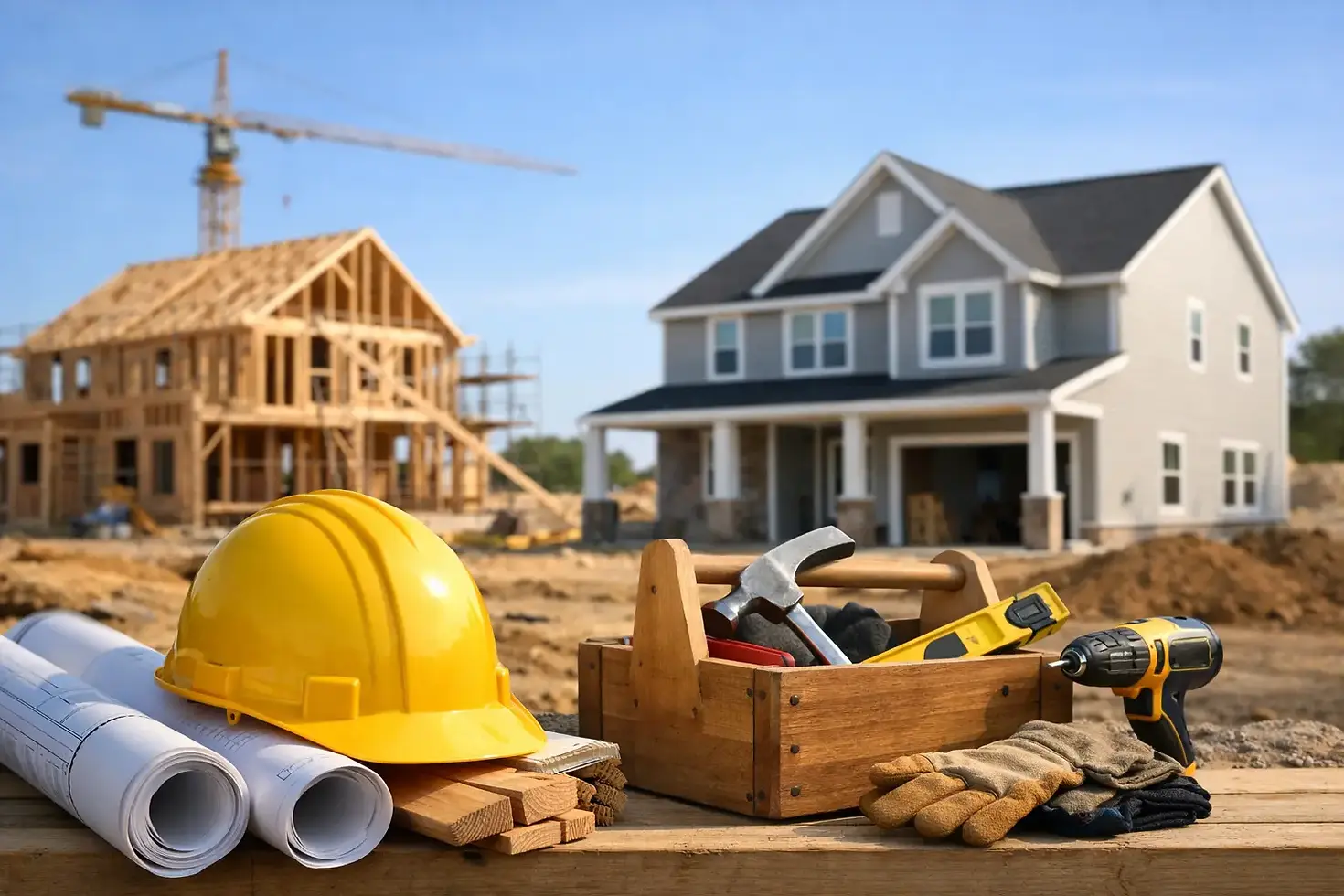
New Home Construction: What to Expect
- May 17
- 6 min read
A vacant lot can look simple until the first real decisions show up. Setbacks, grading, utility access, drainage, soil conditions, plan review, and budget alignment all start shaping the project before a foundation is ever poured. That is why new home construction works best when it is treated as a managed process, not just a build.
For homeowners in the Bay Area, the stakes are even higher. Land values are significant, local permitting can be demanding, and design choices need to perform as well as they look. A well-run project protects your investment, keeps avoidable delays under control, and gives you a home that fits the property, the neighborhood, and the way you actually live.
Why new home construction requires early planning
The biggest misconception about building from the ground up is that construction starts when crews arrive on site. In reality, the outcome is heavily determined much earlier. Site analysis, architectural planning, engineering, and code review are where many of the expensive mistakes either get prevented or get baked into the project.
A custom home gives you more freedom than a remodel, but it also gives you more decisions to make. Floor plan, orientation, window placement, structural design, ceiling heights, energy performance, finish level, and utility coordination all affect cost and schedule. If those choices are made in isolation, the project can drift. If they are made under one clear construction strategy, the process becomes far more predictable.
This is where experienced project leadership matters. Homeowners should not have to act as the middleman between designer, engineer, permit desk, and subcontractors. The right builder helps you make smart decisions in the right order so the project keeps moving.
The main phases of new home construction
Every project has its own details, but the overall path is fairly consistent. Understanding the phases helps homeowners ask better questions and spot weak planning before it becomes a problem.
Pre-construction and feasibility
This phase usually begins with the property itself. Zoning, lot coverage, height limits, access, utility connections, easements, and neighborhood requirements can all affect what you can build. On some lots, the design opportunities are excellent. On others, the site creates limitations that need to be addressed early.
Feasibility is also about budget reality. A homeowner may have a clear vision for size and finish quality, but the property conditions or jurisdiction requirements may push costs higher than expected. It is better to identify that early than to redesign after months of planning.
Design and engineering
Once the project direction is clear, plans move into architectural and engineering development. This stage turns ideas into buildable documents. Structural engineering, Title 24 energy compliance, drainage planning, and other technical requirements need to line up with the design intent.
Good design is not only about appearance. It should account for constructability, material lead times, and cost control. A beautiful plan that creates avoidable framing complexity or forces constant field changes can create budget pressure very quickly.
Permitting and approvals
Permitting is often one of the least understood parts of new home construction. Review timelines vary by city, and plan comments can require multiple rounds of revisions. In some cases, planning approval, public works review, utility coordination, or site-specific studies add more time.
That does not mean the process has to feel chaotic. With proper preparation, permit review becomes a managed stage instead of a guessing game. Clear plans, accurate submissions, and prompt responses make a real difference.
Site work and foundation
Once permits are issued, site preparation begins. Depending on the lot, that may include demolition, excavation, grading, retaining work, drainage infrastructure, and utility trenching before foundation work starts.
This phase often reveals the practical reality of the site. Soil conditions, water management, and access limitations can affect methods and cost. That is why experienced builders avoid making promises too early without understanding the property in detail.
Framing, systems, and interior build-out
Framing gives the home its structure and shape, but it is only one part of the larger process. Plumbing, electrical, HVAC, insulation, and inspections all need to be carefully coordinated before drywall and finish work begin.
This is where project management is tested. Scheduling trades in the right sequence, ordering materials on time, and resolving field issues without slowing down the job requires steady oversight. A home can look like it is moving quickly from the outside while critical decisions inside still determine whether the finish line stays on track.
Finishes, punch list, and delivery
Final finishes are what homeowners see every day, so expectations are naturally high. Cabinetry, flooring, tile, fixtures, paint, trim, appliances, and exterior details all need attention. At this stage, small errors become more visible, which is why quality control matters just as much near the end as it does at the start.
A proper closeout should include final inspections, system checks, punch list completion, and a clear handoff. The goal is not just to finish the project. It is to deliver a home that feels complete and performs the way it should.
Budget decisions that have the biggest impact
Cost is one of the first questions homeowners ask, and for good reason. New home construction is a major investment, especially in high-value markets where labor, permitting, and material standards are not inexpensive.
The most important budget point is this: square footage matters, but complexity matters too. A straightforward design with disciplined material selections can often deliver better value than a larger home filled with structural complications and finish upgrades that do not improve daily living.
Site conditions also affect cost more than many people expect. Sloped lots, limited access, older utility infrastructure, and extensive drainage requirements can all move the budget. So can design changes made after construction starts. Late revisions are one of the fastest ways to create unnecessary expense.
The best approach is cost-conscious planning from the beginning. That means setting priorities early, understanding where premium spending adds real value, and keeping the plan aligned with construction reality. If your focus is long-term durability, energy efficiency, and a layout that supports your lifestyle, budget decisions become easier to make.
Timeline expectations and common delays
Homeowners often want a simple answer on timing, but the honest answer is that it depends on the scope, jurisdiction, site conditions, and decision-making speed. A custom home is not a one-size-fits-all project.
What can be controlled is preparation. Incomplete plans, unclear specifications, slow material approvals, and frequent owner changes are some of the most common causes of delay. Permit review can also extend timelines, particularly when a city requests revisions or additional documentation.
Weather is another factor, though in many Bay Area locations the larger issue is coordination rather than climate. Material lead times, inspection scheduling, and trade availability can all affect progress. A realistic construction schedule should account for those variables instead of assuming a perfect sequence.
Choosing the right team for new home construction
The right builder does more than provide labor. They guide the process, identify risks early, and keep the project moving with accountability. That is especially important when homeowners want one point of contact instead of managing a separate designer, engineer, permit expediter, and multiple trades on their own.
When evaluating a contractor, ask how they handle pre-construction planning, permitting, budgeting, and change management. Ask who is responsible for communication and how site issues are resolved. A strong answer should sound clear and practical, not vague.
For many homeowners, trust comes down to one question: can this team lead the job from concept to completion without making the process harder than it needs to be? That is the standard worth holding. Generation Builders USA works with that mindset because clients need more than a crew on site. They need a trusted builder who can take ownership of the result.
Building for the way you will live
A new home should not be designed around trends alone. It should reflect how your household uses space now and how that may change over time. Open gathering areas, private work zones, aging-in-place features, storage planning, natural light, and indoor-outdoor flow all deserve thoughtful consideration.
The best homes are not always the most complicated. Often, they are the ones where layout, materials, and construction quality are aligned from the start. That takes discipline, experience, and a willingness to make smart decisions early instead of expensive corrections later.
If you are considering new home construction, start with clarity. Understand the property, define your priorities, and work with a team that can manage the details without losing sight of the bigger picture. A well-built home is not just about what gets finished. It is about what gets done right the first time.


Comments