
Whole House Remodel Timeline Explained
If you are planning to gut an older home, rework the layout, update systems, and finish every room, the first question is usually not about tile or paint. It is how long this is going to take. A realistic whole house remodel timeline matters because it shapes your budget, your living arrangements, and the decisions you make before work even begins.
The short answer is that a full-home remodel often takes several months, and in many cases closer to nine to twelve months from first consultation to final completion. Smaller homes with light structural work can move faster. Older Bay Area homes, homes with permit-heavy scope, or projects that involve major layout changes, additions, or utility upgrades usually take longer. The difference comes down to planning, permit approval, material lead times, and how well the project is managed from day one.
What a whole house remodel timeline usually includes
Many homeowners think of the timeline as the construction phase only. In reality, construction is just one part of the process. A whole house remodel timeline usually starts with planning, budgeting, design, and feasibility review long before demolition begins.
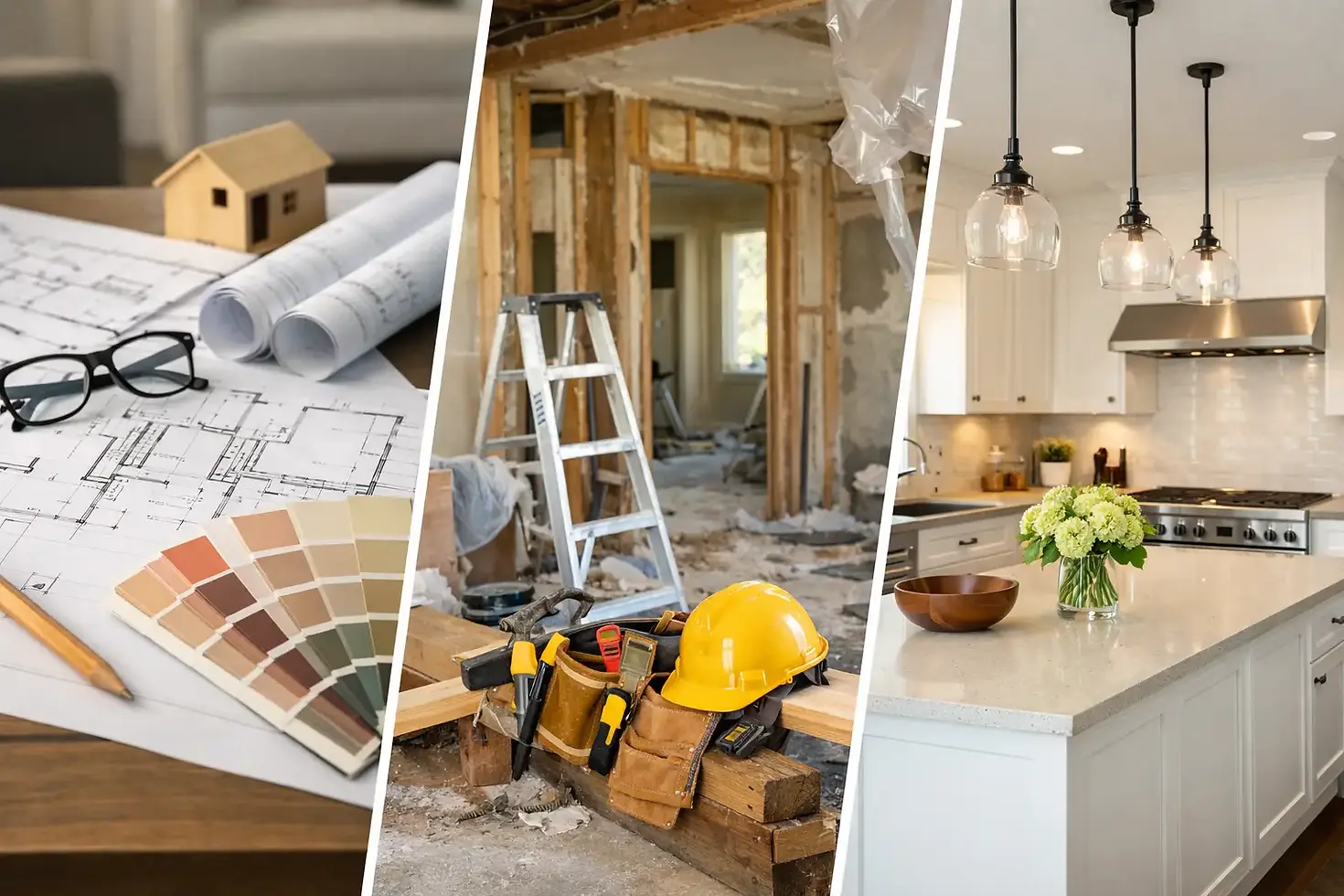
For a true full-home renovation, the process often breaks into three broad stages. First comes pre-construction, where the scope is defined, measurements are taken, plans are developed, pricing is refined, and permits are prepared. Next comes active construction, which includes demolition, framing, rough mechanical work, inspections, insulation, drywall, finishes, and fixture installation. Last comes closeout, where punch-list items are handled, systems are checked, and the home is prepared for final sign-off.
That structure sounds straightforward, but timing inside each stage can vary. A well-organized project team can save weeks. A project with unclear selections or repeated scope changes can lose those same weeks just as quickly.
A realistic whole house remodel timeline by phase
1. Consultation, site review, and budgeting
This phase often takes one to three weeks. It starts with understanding what you want to change, what the house can support, and what budget range makes sense. If the home is older, this is also when hidden issues may start to surface, such as outdated wiring, foundation movement, water damage, or unpermitted past work.
This early stage is where strong contractor guidance matters. A homeowner may walk in focused on finishes, but the real timeline often depends more on structural changes, mechanical upgrades, and permit requirements than on surface selections.
2. Design and scope development
This phase commonly takes four to ten weeks, sometimes longer for complex projects. If you are moving walls, changing plumbing locations, adding square footage, or redesigning kitchens and bathrooms at the same time, you need coordinated plans. That can involve drafting, architectural design, structural engineering, and detailed construction planning.
The more decisive you are during this phase, the better. Selection delays can stall the project before it even starts. If cabinets, windows, plumbing fixtures, flooring, or appliances are undecided, the construction schedule becomes harder to lock down.
3. Permitting and approvals
Permits can take anywhere from a few weeks to several months depending on the city, the project scope, and whether revisions are requested. In Peninsula and Bay Area jurisdictions, this can be one of the least predictable parts of the schedule.
A cosmetic interior remodel with limited system changes may move through approvals faster. A full-home remodel involving structural work, electrical upgrades, plumbing relocation, or energy compliance usually needs more review. This is why homeowners should be careful about promises that sound too fast. The contractor can control preparation quality and follow-up, but not the city review calendar.
4. Demolition and site prep
Once permits are in place and materials are lined up, demolition typically takes one to three weeks. This stage moves quickly, but it is also when concealed problems are often uncovered. Dry rot behind walls, asbestos-related concerns, subfloor damage, or old framing that does not meet current standards can all affect the next steps.
This is not necessarily a sign of a bad project. It is a sign that older homes reveal their condition only after opening up the structure. What matters is having a contractor who can respond decisively and keep the project moving with clear recommendations.
5. Framing, structural work, and rough-ins
This phase often takes four to eight weeks. If walls are being moved, beams installed, or floor plans reworked, framing comes first. After that, electrical, plumbing, and HVAC rough-ins are completed before walls are closed.
Inspections are tied to this stage, and inspection scheduling affects pace. If corrections are needed, the timeline may stretch. If all trades are coordinated well and the work is properly prepared, this stage tends to move much more efficiently.
6. Insulation, drywall, and interior surfaces
This part usually takes two to five weeks. Once rough inspections are approved, insulation goes in, drywall is hung and finished, and interior surfaces start to look like a home again. Texture, primer, and some early paint work may happen here as well.
Homeowners often feel the project is nearly done at this point. In reality, there is still a significant amount of work left. Finish carpentry, cabinetry, tile, flooring, countertops, plumbing trim, lighting, hardware, and final paint take time and require sequencing.
7. Finish work and installation
This stage often takes four to ten weeks, depending on how much custom work is involved. Kitchens, bathrooms, built-ins, specialty tile, detailed trim, and custom millwork all add time. This is also the phase where lead times can hit hardest if materials have not arrived when needed.
The quality of the final result is heavily shaped here. Rushing this stage to save a week often creates problems that remain visible for years. Good builders protect the schedule, but they also protect the standard of work.
8. Final inspections, punch list, and closeout
This final stage usually takes one to three weeks. Fixtures are tested, details are reviewed, corrections are made, and final inspections are completed. Even a well-run project will have punch-list items. The goal is not to pretend those do not exist. The goal is to handle them efficiently and thoroughly.
What can make the timeline shorter or longer
Square footage matters, but it is not the only factor. A 1,500-square-foot home with major structural changes can take longer than a 2,500-square-foot home with mostly finish upgrades. The real drivers are complexity, approvals, and decision speed.
Older homes typically take longer because they come with more unknowns. In many Bay Area properties, especially where previous remodels were done decades ago, contractors may need to correct outdated framing, electrical, or plumbing conditions before moving forward. That is not wasted time. That is what it takes to do the job right the first time.
Material availability also plays a major role. Custom windows, specialty tile, cabinetry, and certain appliances can extend the schedule if they are ordered too late. This is why experienced project planning matters. A strong team aligns selections and procurement with the build schedule instead of treating them as separate tasks.
Client changes during construction can also shift the timeline. Some changes are manageable. Others affect permits, framing, or ordered materials and create a chain reaction. If you want to keep the project on track, make the big decisions early and avoid redesigning key spaces after rough work has started.
Should you move out during a full-home remodel?
For most whole house remodels, yes. If the project involves multiple bathrooms, a kitchen, flooring throughout, electrical shutdowns, or open walls across the home, living in the house usually creates more stress and can slow the work down.
There are exceptions. A phased remodel may allow occupancy in part of the home, especially if the scope is limited to one section at a time. But for a true full-home renovation, temporary housing often leads to a safer jobsite, better productivity, and fewer delays. It also gives the contractor room to coordinate trades without working around daily household routines.
How to keep your remodel on schedule
The best way to protect your timeline is to start with a clear scope and a contractor who manages the process tightly. That means design coordination, permit preparation, realistic scheduling, material planning, and daily oversight during construction.
It also means accepting that some flexibility is part of the process. Any contractor who promises an exact finish date on a complex remodel before design, permitting, and demolition are complete is guessing. A dependable builder gives you a realistic range, explains what could affect it, and keeps you informed as the project moves forward.
At Generation Builders USA, that is how we approach major renovations - with clear planning, direct communication, and one accountable team guiding the project from concept through completion.
If you are weighing a full-home renovation, treat the timeline as a planning tool, not just a countdown. The right schedule gives you room to make smart choices, solve problems early, and end up with a home that feels worth the disruption.


Comments