
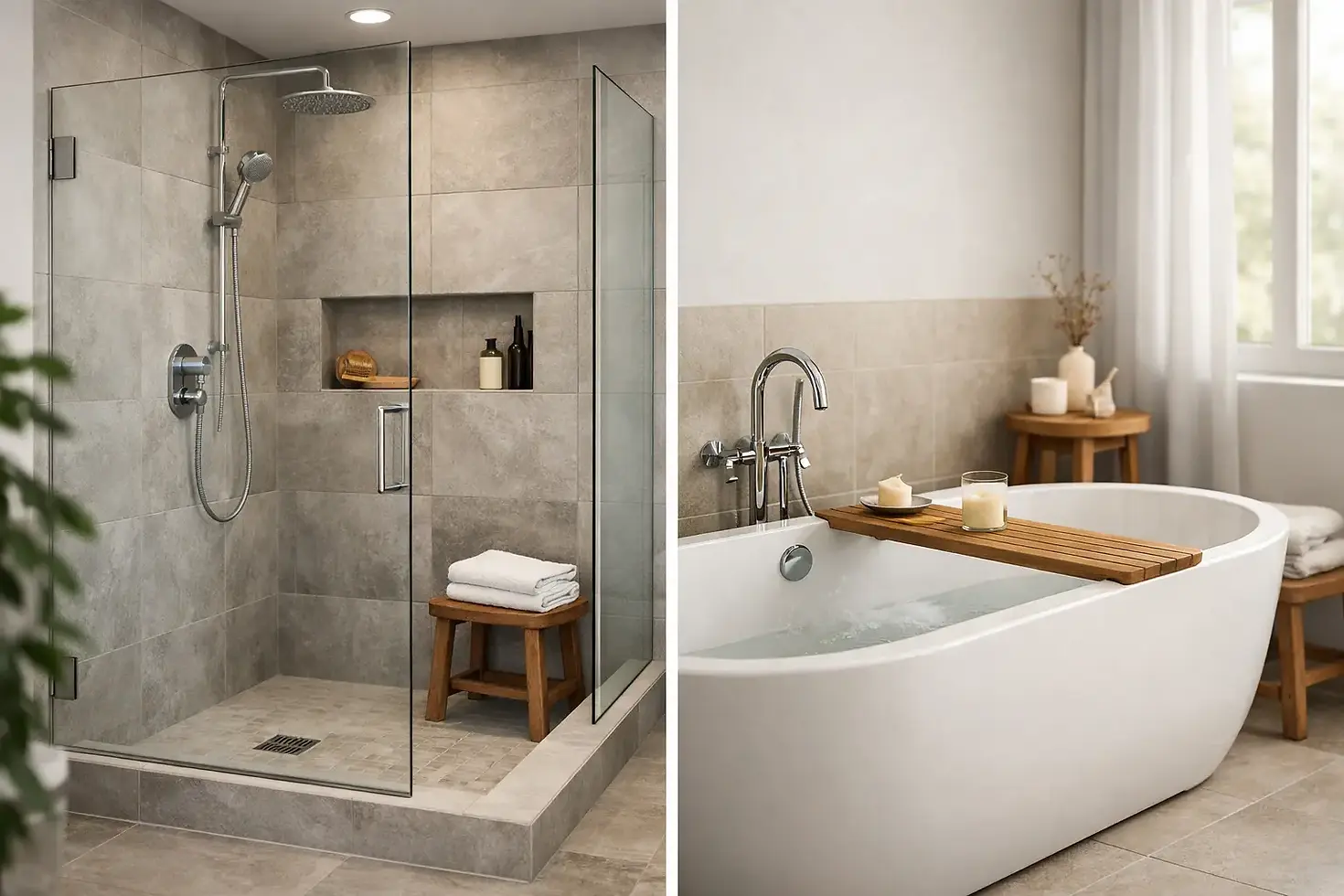
Walk In Shower vs Tub: Which Fits Best?
If your bathroom remodel comes down to a walk in shower vs tub decision, the right answer usually has less to do with trends and more to do with how you actually live. A beautiful bathroom that misses your daily needs can become an expensive compromise fast. The better choice is the one that fits your space, your household, and your long-term plans for the home.
In the Bay Area, this question comes up often because many homes have aging bathrooms, limited square footage, and high property values. That means every remodeling decision carries extra weight. Homeowners want a bathroom that looks current, works better, and still makes sense for resale.
Walk in shower vs tub: start with daily use
The fastest way to make this decision is to be honest about routine. If no one in the home takes baths, replacing a bulky tub with a walk-in shower can free up space and make the room feel cleaner, larger, and easier to use. For many homeowners, especially in primary bathrooms, that is a practical upgrade rather than just a style choice.
A tub still earns its place when it serves a real need. Families with young children often rely on one. Some homeowners simply prefer soaking at the end of the day. If that is part of your normal routine, removing the tub may solve one problem while creating another.
This is where remodel planning needs to stay grounded. A feature you never use becomes wasted square footage. A feature you use every week is worth protecting.
Space changes the answer
Bathroom size matters more than most people expect. In a compact hall bathroom, forcing both a separate tub and shower can make the room feel tight and awkward. A standard tub-shower combination may be the most efficient layout there, especially if the bathroom serves guests or children.
In a larger primary suite, a walk-in shower often gives you more design flexibility. You can add a wider entry, a frameless glass enclosure, a built-in bench, better lighting, and niche storage without crowding the room. The result feels more custom and more aligned with how people use primary bathrooms today.
If the room is small, a walk-in shower can still be the right move, but it has to be designed carefully. Drain placement, waterproofing, door swing, and storage all matter. Good design can make a small bathroom feel intentional. Poor design can make it feel unfinished.
When a tub makes more sense in a small bathroom
If the home has only one bathroom, keeping at least one tub is often the safer choice. That is especially true for families and for homeowners thinking about future resale. Buyers may accept a shower-only primary bath, but a house with no tub at all can narrow the pool.
That does not mean every home must keep one. It means the decision should be tied to the full property, not just one room.
Resale value is not one-size-fits-all
A lot of homeowners ask which option adds more value. The honest answer is that value depends on the home, the neighborhood, and the buyer profile.
A well-built walk-in shower in a primary bathroom can absolutely help a remodel feel more current and more upscale. In many higher-value markets, buyers expect a comfortable shower with strong water control, modern finishes, and easy access. It often reads as a premium improvement, especially in older homes that still have cramped tub enclosures.
At the same time, removing the only tub in the house can work against you. Families with children often want at least one bathtub. If resale is a major concern, a common recommendation is simple: keep one tub somewhere in the home and feel free to make the primary bath shower-focused.
That balance tends to satisfy both lifestyle and market appeal. It also gives you more freedom to design the primary bathroom around comfort instead of trying to make every bathroom do everything.
Safety and accessibility often favor a walk-in shower
For homeowners planning to stay in their home long term, accessibility matters. A walk-in shower is usually easier to enter and exit than a standard tub. That becomes more important with age, injury recovery, or multigenerational living.
This does not mean every walk-in shower is automatically safer. The details matter. Slip-resistant flooring, proper drainage, grab bar reinforcement, comfortable entry dimensions, and a practical curb height all affect how safe the space feels in real use.
A tub can still be workable, but stepping over a high edge is one of the first things that becomes inconvenient in an aging bathroom. If you are remodeling with long-term use in mind, a curbless or low-threshold shower is often the better investment.
Cost depends on more than the fixture
The cost question is usually framed too simply. Homeowners ask whether a walk-in shower is cheaper than a tub, but the real answer depends on scope.
If you are swapping one standard fixture for another in roughly the same footprint, costs may be fairly close. If you are creating a custom walk-in shower with tile walls, frameless glass, a bench, recessed niches, upgraded plumbing fixtures, and layout changes, the cost rises quickly. The same goes for a freestanding tub installation if it requires plumbing relocation, structural adjustments, or high-end finishes.
Labor and construction conditions matter too. In older Bay Area homes, opening walls can reveal outdated plumbing, water damage, or framing issues that need to be corrected before finish work begins. Those are not optional upgrades. They are the kind of behind-the-wall realities that determine whether the remodel lasts.
That is why cost-conscious planning matters early. A trusted contractor should help you understand where the money is going, what is worth upgrading, and where a simpler solution may serve you better.
Maintenance is a real quality-of-life issue
A walk-in shower is often easier to use, but not always easier to maintain. Large-format tile can reduce grout lines, while frameless glass can look great but show water spots quickly. Natural stone may require more upkeep than porcelain. Linear drains and custom slope work can perform well, but only when they are installed correctly.
A tub can be simpler in some ways, especially a standard alcove model with a straightforward surround. It may also be the lower-maintenance option in a secondary bathroom used by kids.
The right question is not which one is easier on paper. It is which one will still feel practical after years of daily use. That depends on material choices as much as layout.
Walk in shower vs tub in a primary bathroom
In a primary bathroom, a walk-in shower is often the stronger choice because it reflects how most adults use the space day to day. It can improve movement, make the room feel more open, and support a more modern layout. If the bathroom is being redesigned from the ground up, this option usually offers the most flexibility.
A tub still belongs in a primary bath when there is room for it and when the homeowner will genuinely use it. A separate soaking tub can be a luxury feature, but only if it fits the room comfortably. In too many remodels, the tub is kept for appearance while the shower remains too small. That is not a good trade.
If space is limited, prioritize the feature that carries the most real use. Most homeowners benefit more from a generous shower than from a decorative tub they rarely touch.
What to ask before you decide
Before finalizing your layout, think through a few practical questions. Is this the only bathroom with a tub in the house? Who will use this bathroom most often? Are you remodeling for your current lifestyle, aging in place, future resale, or some mix of all three? Do you want a simpler refresh, or are you already investing in a full redesign?
Those answers usually make the direction clearer. A good remodel decision should feel consistent with the rest of the home, not isolated from it.
For many households, the best answer is not choosing one side in the walk in shower vs tub debate as if there were a universal winner. It is building the bathroom around the people who live there and keeping one eye on how the home functions as a whole.
If you are planning a bathroom remodel and want clear guidance before construction starts, Generation Builders USA can help you weigh layout, budget, and long-term value without overcomplicating the process. The smartest bathroom upgrade is the one you can count on every day, not the one that only looks good on a mood board.


Comments